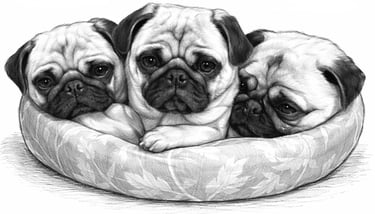
Stubborn Pug Training Hacks You Need
Discover effective training hacks for your stubborn pug and hard-to-please dogs. Learn tips and techniques for successful pug training to overcome challenging behaviors.
5/10/20268 min read


Understanding Pug Personality Traits
Pugs are renowned for their distinctive personalities that can sometimes be mistakenly interpreted as stubbornness. This breed exhibits a collection of traits that reflect its historical evolution and unique characteristics. Originating in ancient China, pugs were bred as companion animals for royalty, which has imbued them with a sense of independence and a desire for attention. This pursuit for affection can often manifest as selective obedience, where they may respond to commands only when they choose to.
One of the most prominent traits of pugs is their playful and affable nature. They are known for their exuberance and ability to delight their owners with silly antics. This playful demeanor can, on occasion, be misread as a lack of compliance, especially when they appear more enthusiastic about playtime than following commands. Their inherent curiosity drives them to explore their surroundings, which may also lead them to seem disobedient when they prioritize exploration over obedience.
Additionally, a pug's intelligence plays a significant role in their behavior. While they are capable learners, they can also exhibit a tendency to act independently, demonstrating a preference for self-directed play rather than adhering to structured instruction. This independent streak can contribute to the perception of stubbornness, as pugs may choose to follow their interests instead of the tasks their owners wish them to complete.
Understanding these behavioral nuances is key for pug owners. Recognizing that what may appear as stubbornness is often just a manifestation of their personality traits can lead to more effective training approaches. By learning to appreciate the pug's playful spirit and innate independence, owners can tailor their training methods, ultimately fostering a more harmonious relationship with their beloved pets.
Understanding Stubborn Behavior in Pugs
Pugs, like many dog breeds, can exhibit stubbornness which often stems from a variety of underlying reasons. One of the primary factors contributing to this behavior is a lack of motivation. Pugs may not respond well to training if they do not find the rewards appealing enough. It's crucial to discover what motivates your pug, whether it's treats, toys, or affection, and incorporate those into your training sessions. Tailoring the rewards to your pug's preferences can significantly enhance compliance and reduce stubbornness.
Another contributing factor could be inconsistent training approaches. Dogs thrive on routine and clear commands. If a pug receives mixed signals during training—where certain commands are enforced on some occasions but not others—confusion can lead to a stubborn demeanor. Consistent training, where commands and expectations remain the same, is vital in helping your pug understand what is required of them.
Health issues can also play a detrimental role in behavior, potentially leading to stubbornness. If a pug is experiencing pain or discomfort due to health conditions like arthritis or dental issues, they may display signs of resistance during training. It is essential to consult a veterinarian if you suspect an underlying health problem contributing to your dog's behavior. Addressing physical issues may resolve instances of stubbornness and improve your pug's overall temperament.
Lastly, external distractions can interfere with a pug's ability to focus and respond to commands. Pugs can be easily distracted by their environment, such as noises, other animals, or people. Training in a quiet, controlled space can help limit these distractions, allowing for better focus and improved response times from your pug.
The Importance of Positive Reinforcement Training
When it comes to training dogs, particularly stubborn breeds like pugs, the method of positive reinforcement has proven to be highly effective. Positive reinforcement involves rewarding desirable behavior rather than punishing undesirable behavior. This technique encourages dogs to repeat actions that lead to rewards, creating a more productive training environment. For owners of pug dogs who may exhibit strong-willed tendencies, implementing positive reinforcement can be especially beneficial.
Unlike negative reinforcement, which may instill fear or anxiety in dogs, positive reinforcement fosters a sense of trust and connection between the dog and its owner. This approach involves providing treats, praise, or toys whenever the dog responds correctly to commands or exhibits good behavior. For example, when training a pug to sit, offering a treat immediately as the dog sits reinforces the action and helps the pug associate the command with a rewarding experience.
Moreover, pugs, known for their charming but stubborn disposition, respond well to positive reinforcement because it aligns with their playful nature. By focusing on rewards, owners can transform training into a fun and engaging activity rather than a chore. Additionally, this method enhances the likelihood of achieving lasting results. Dogs trained with positive reinforcement tend to remember commands better and display improved behavior over time.
Furthermore, incorporating various types of rewards, from verbal affirmations to interactive play, can maintain a pug's interest during training sessions. This variety not only keeps the process enjoyable but also allows for a stronger bond to form between the pug and its owner. In summation, positive reinforcement is not just a training technique; it is an essential approach for fostering good behavior in stubborn dogs, ensuring a harmonious relationship and effective training outcomes.
Practical Training Hacks for Stubborn Pugs
Training a pug, known for their stubbornness, can often be a challenge. However, employing practical hacks can foster an effective training environment that encourages obedience and compliance. Here are several actionable strategies designed specifically for hard-to-please pugs.
1. Utilize High-Value Treats: One of the most effective ways to motivate a stubborn pug is through the use of their favorite treats. Engaging your pug with high-value rewards, such as small pieces of chicken or commercial training treats, can significantly enhance their willingness to learn and follow commands.
2. Break Commands into Smaller Steps: Instead of expecting your pug to master a complex command all at once, break it down into simpler, more manageable parts. For instance, if teaching a 'sit' command, first reward them for lowering their body rather than fully obeying the command. This incremental approach helps to avoid frustration and encourages progress.
3. Make Training Sessions Engaging: Stubborn pugs often require more than just standard training sessions. Incorporate play into your training routine—use toys or engage them in games that blend training with fun. This not only keeps your pug’s attention but also builds a positive association with learning.
4. Set Short Training Sessions: Pugs, being energetic yet easily distracted, benefit from shorter training sessions lasting around 5 to 10 minutes. Frequent, concise bursts of training will keep their interest piqued and their focus intact.
5. Be Patient and Consistent: Pugs respond well to consistency. Use the same commands and actions consistently, and be patient throughout the training process. Dogs learn at their own pace, and your steadfastness will foster a trusting relationship, ultimately reducing their obstinacy.
By integrating these training hacks into your routine, you will likely observe a positive change in your pug’s responsiveness and willingness to learn, transforming training sessions into more productive and enjoyable experiences.
Establishing a Consistent Training Routine
Training a pug, renowned for its determined personality, can be a challenging endeavor. One of the most effective strategies to enhance a pug's responsiveness is to establish a consistent training routine. Consistency is crucial, especially for stubborn dogs, as it reinforces desired behaviors and fosters a reliable learning environment.
By scheduling training sessions at the same time each day, dog owners can help their pugs understand what is expected of them. This regularity encourages the dog to anticipate training time, thereby increasing enthusiasm and engagement during sessions. It's essential to keep these training sessions brief yet frequent—around 5 to 10 minutes—multiple times a day, especially since pugs can have short attention spans.
Another important aspect of consistency is the use of the same commands and cues throughout the training process. Mixed messages can confuse a pug and lead to frustration for both the dog and the owner. For example, if "sit" is used on one occasion and "sit down" on another, the pug might struggle to associate the commands with the same action. Standardizing commands helps create a clear communication channel between the owner and the pet.
Moreover, incorporating positive reinforcement consistently across all training sessions will be beneficial. Rewards such as treats, praise, or playtime when the pug successfully follows commands, not only motivate the dog but also create positive associations with the training routine. Over time, as the pug learns to respond reliably, the training sessions can evolve to include more complex commands and tricks, maintaining their interest and engagement.
Ultimately, establishing a consistent training routine is vital for fostering an effective training atmosphere for stubborn pugs. By being patient and committed to a structured approach, owners can improve their pug's responsiveness and create a cooperative bond built on trust and understanding.
Handling Distractions During Training Sessions
Training a pug can be a rewarding yet challenging experience, particularly when distractions are present. Pugs, known for their stubbornness and independent nature, may struggle to focus during training if there are competing stimuli. Thus, it is crucial to carefully manage distractions to enhance the effectiveness of training sessions.
Firstly, selecting a conducive environment is vital. Begin training your pug in a quiet space with minimal distractions, such as a room or yard with few people, noises, or other pets. This controlled setting allows your pug to concentrate solely on the training without the temptation of external factors. Over time, as your pug demonstrates improved obedience and focus, you can gradually introduce mild distractions. This technique helps in reinforcing your dog's ability to heed commands despite environmental challenges.
Another practical strategy is to use positive reinforcement during training sessions. Reward your pug with treats, praise, or playtime whenever they successfully ignore distractions. This form of reinforcement strengthens the association between compliance and positive outcomes, encouraging your pug to remain attentive even in the presence of potential distractions.
Additionally, short training sessions can be beneficial. A focused session lasting only 5 to 10 minutes is ideal, as it keeps your pug engaged without overwhelming them. After these short bursts of training, you can gradually increase the duration while remaining attentive to your pug's focus levels. Taking breaks during training also allows for mental rest, making it easier for your pug to return to concentration.
In conclusion, managing distractions during pug training is crucial for fostering obedience. By selecting appropriate environments, introducing distractions gradually, employing positive reinforcement, and utilizing brief training sessions, you can significantly improve your pug's focus and responsiveness, thereby reducing stubbornness in their behavior.
When to Seek Professional Help
Determining when to seek assistance from a professional dog trainer or behaviorist can be a pivotal decision for pug owners struggling with stubbornness in their pets. Pugs, known for their charming personalities, can sometimes exhibit challenging behaviors that require expert intervention. If you find yourself increasingly frustrated or overwhelmed by your pug’s training issues, it may be time to consider professional help.
Signs that indicate the necessity for expert guidance include persistent disobedience despite consistent training efforts, significant behavioral issues such as aggression or excessive barking, or difficulty in socialization with other dogs and people. If basic commands like "sit" or "stay" remain unresponsive, or if your pug displays anxiety during training sessions, engaging a professional trainer can be beneficial. Expert trainers have the experience and knowledge to understand the underlying causes of such behaviors, which can often stem from fear, anxiety, or a lack of socialization, rather than mere stubbornness.
The advantages of professional dog training extend beyond resolving immediate issues. Professional trainers can provide tailored strategies to improve your pug’s responsiveness and adherence to commands. They utilize positive reinforcement techniques that not only foster better behavior but also strengthen the bond between owner and pet. A skilled behaviorist can also help you understand your pug's unique personality traits and tailor training methods that align with those traits, making the experience less frustrating and more productive.
In summary, while many stubborn behaviors can be addressed with patience and consistent training, recognizing when to seek professional assistance is crucial for the well-being of your pug. A qualified dog trainer can offer insights and tools that enhance the training experience and promote positive behaviors tailored to your pug’s needs.